MaintProof is a Web3-based document verification prototype for maintenance reports. It generates a file hash in the browser and checks whether that hash has been registered in blockchain records.
Maintenance report documents can be altered, duplicated, or submitted without a clear verification trail, making a lightweight proof-of-integrity mechanism useful.
Goal
Explore how hashing and blockchain records can support document integrity verification for maintenance reporting scenarios.
My Role
Designed and developed an academic Web3 prototype for document verification inspired by maintenance reporting workflows.
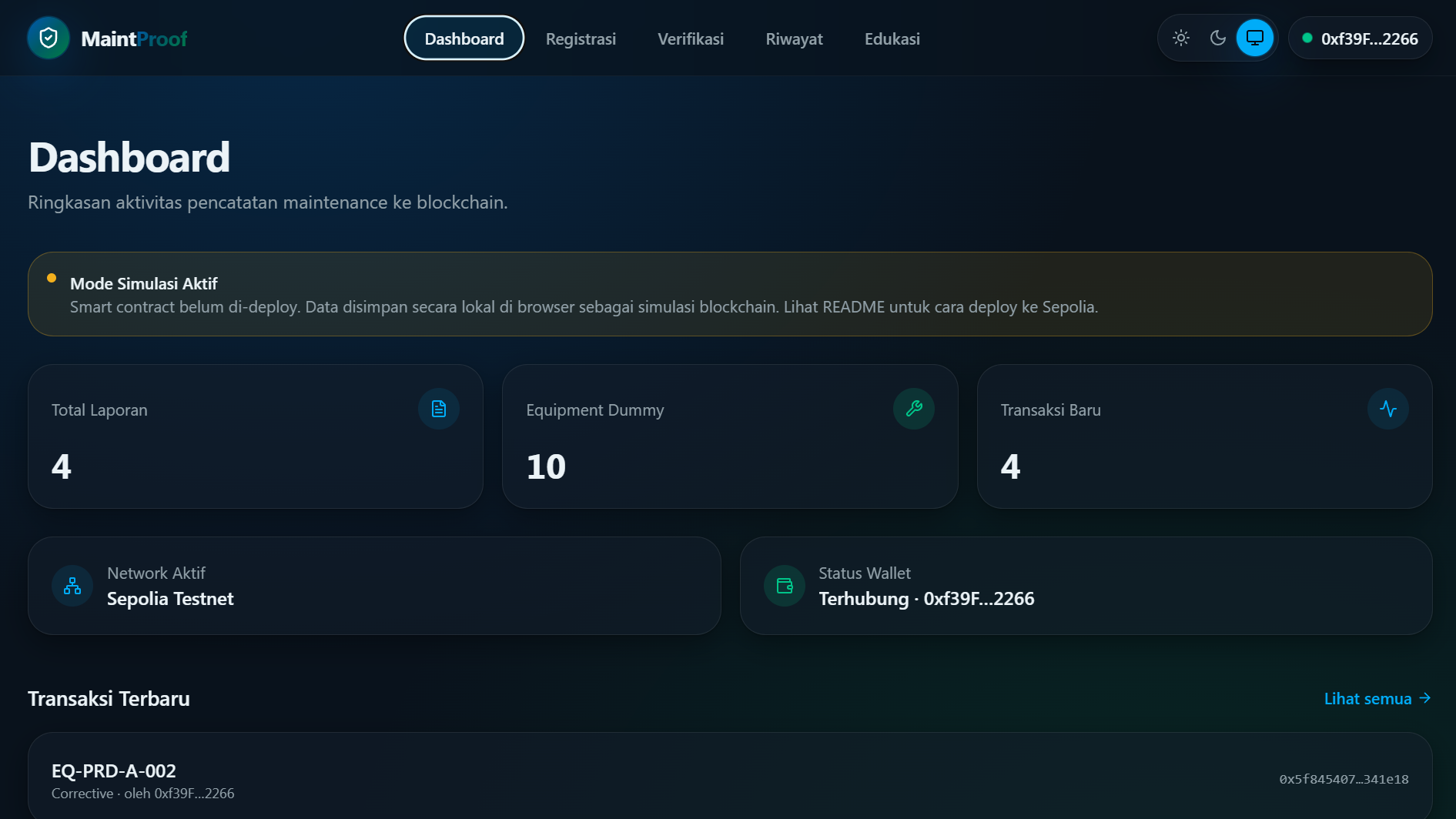
Dashboard summary for reports, equipment, network, and wallet status
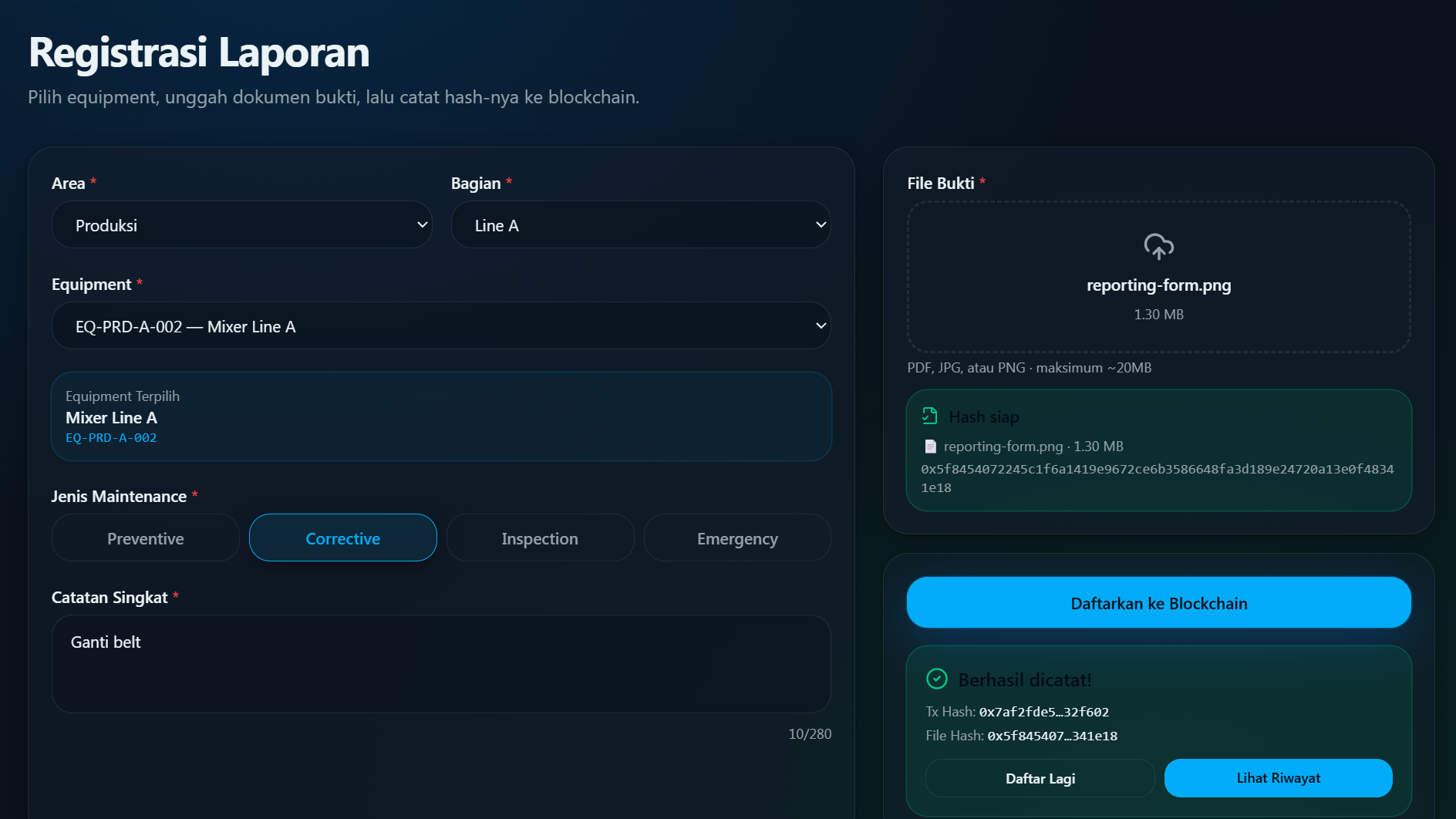
Maintenance report registration flow using area, section, and equipment selection
Browser-based file hash calculation
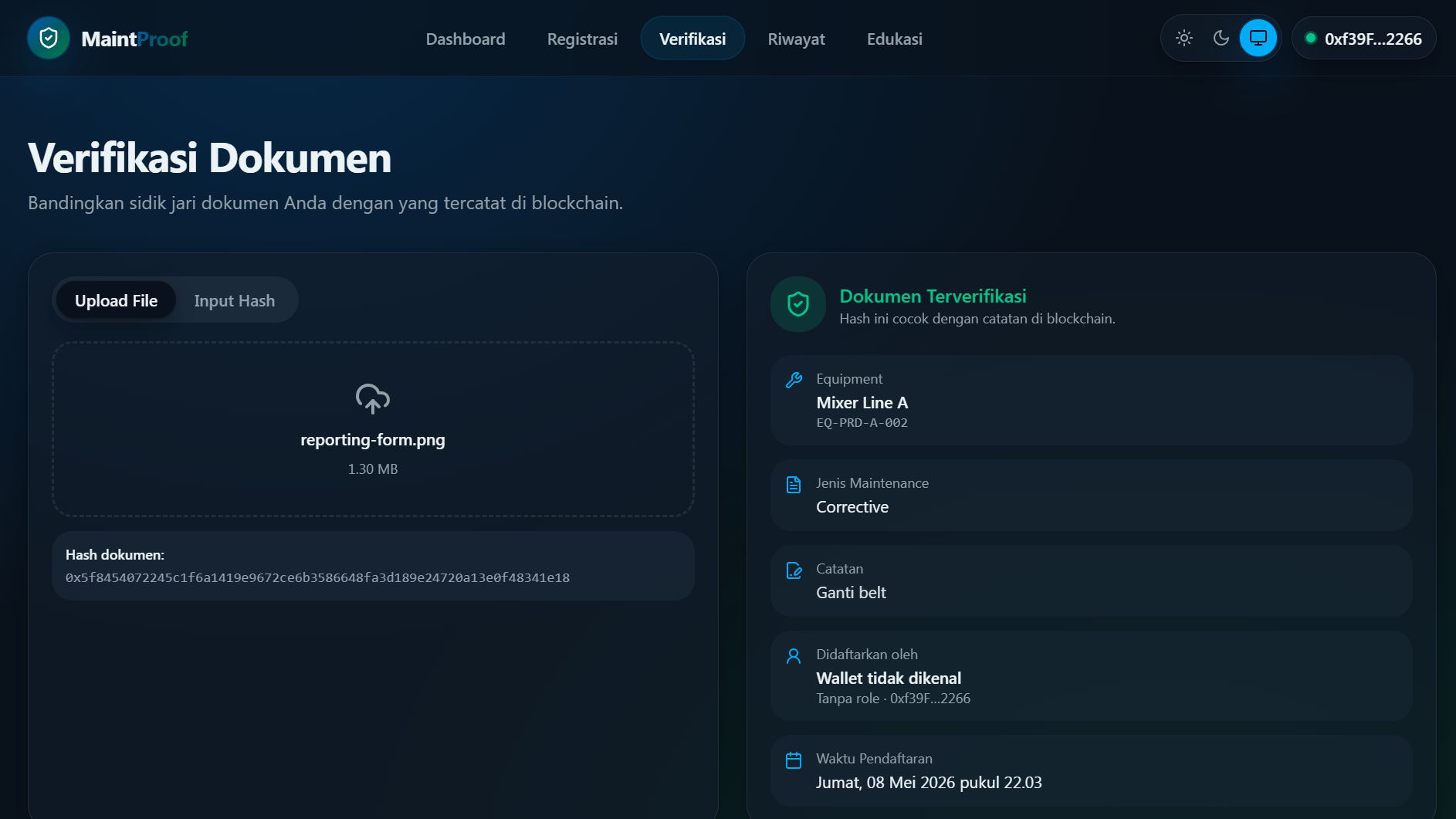
Document verification via file upload or hash input
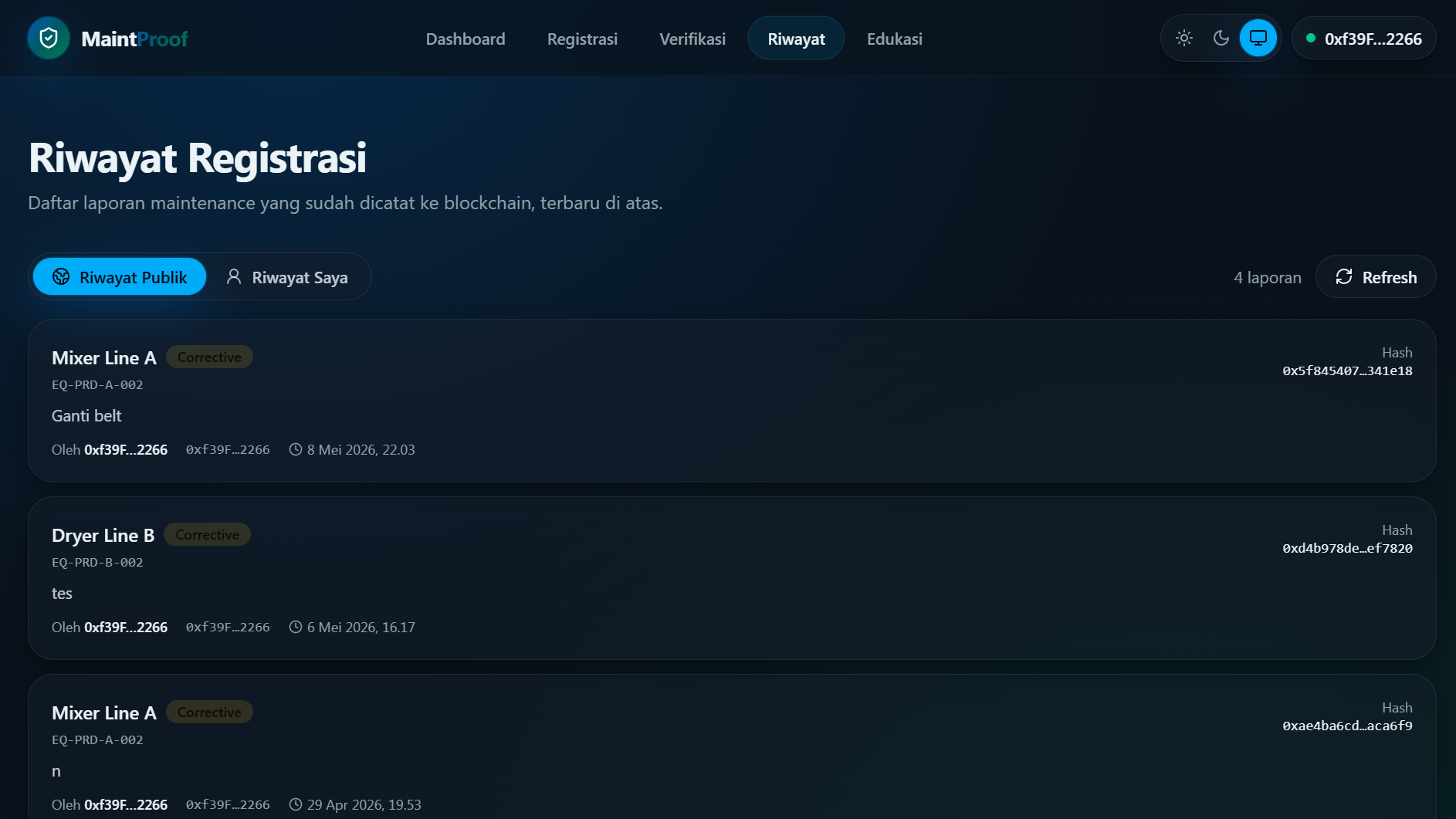
Transaction history and audit trail
Educational section explaining hash, blockchain, and system architecture
Light, dark, and system theme support
Simulation mode using localStorage when contract address is not configured
Screenshots
Dashboard summary for reports, equipment, network, and wallet status.
Report registration flow using area, section, equipment, and browser-based file hashing.
Verification page for checking file integrity through upload or hash input.
Recent registration history with audit trail and verification records.
Process / Workflow
Translated a maintenance reporting problem into a document integrity use case. Designed registration and verification flows around file hashing. Prepared a simulation mode so the prototype remains usable without a deployed contract. Added educational explanations to make the Web3 concepts easier to understand.
Impact or Outcome
Demonstrates how hashing and blockchain records can support document integrity verification.
Shows a practical academic use case connected to maintenance reporting workflows.
Creates a base for future smart contract deployment and public demo work.
What I Learned
A file hash can act as a compact fingerprint for integrity checks. Web3 prototypes still need clear UX, fallback states, and simple explanations. Simulation mode is useful for testing flows before infrastructure is fully configured.